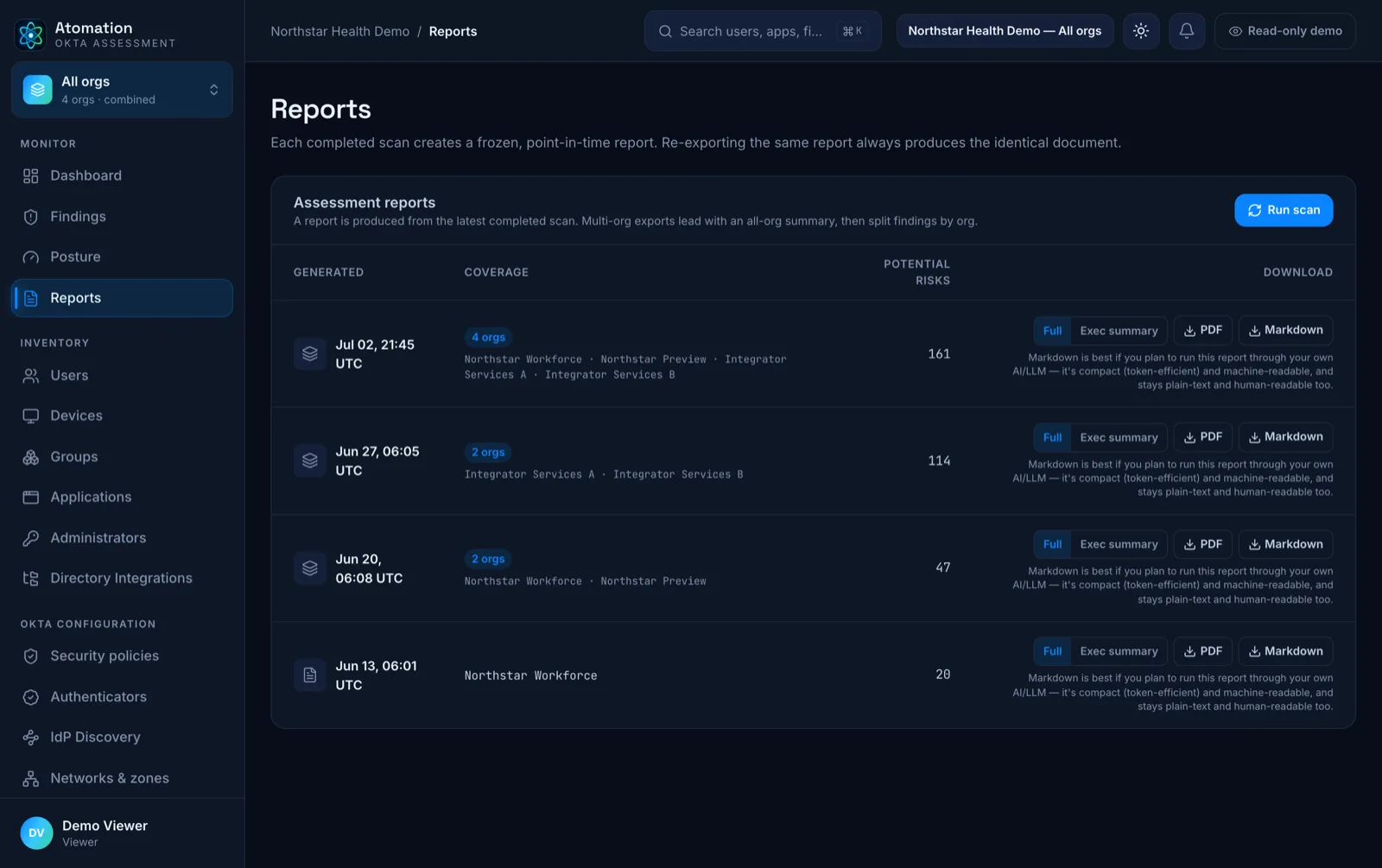
Findings should carry the proof behind the risk.
Public examples are sanitized and representative. The useful shape is the same: finding, affected scope, evidence trail, and review path.
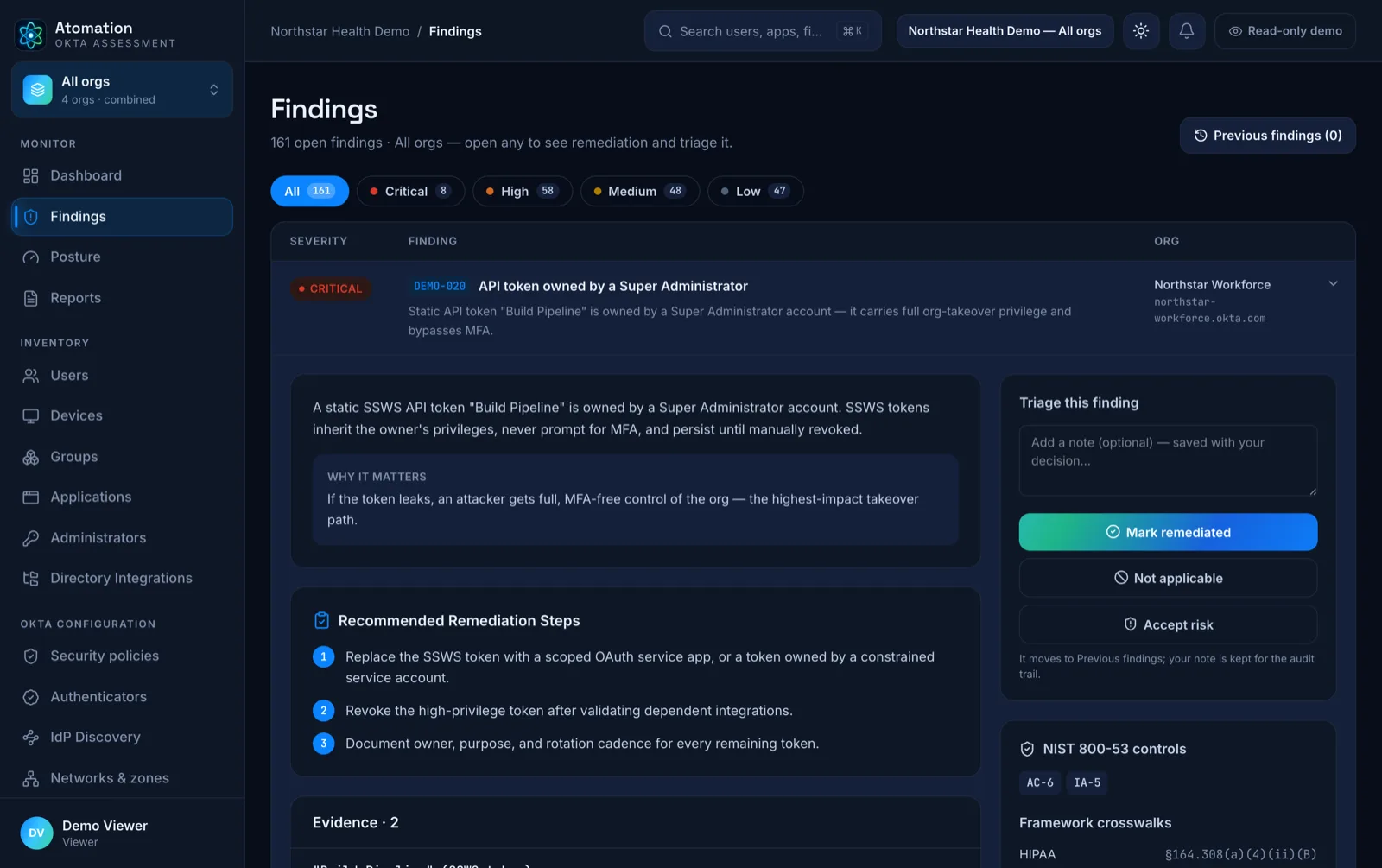
Examples are organized by evidence job.
Cascading group-rule dependencies
Group automation can hide assignment paths when one rule feeds another or duplicates conditions.
Prioritized finding cards
Severity, affected objects, current state, and next step stay together for review.
Control mapping
Framework context can travel with the same finding when the engagement requires it.
Screenshots support the finding trail.
Use screenshots where they prove dashboard state or evidence context.
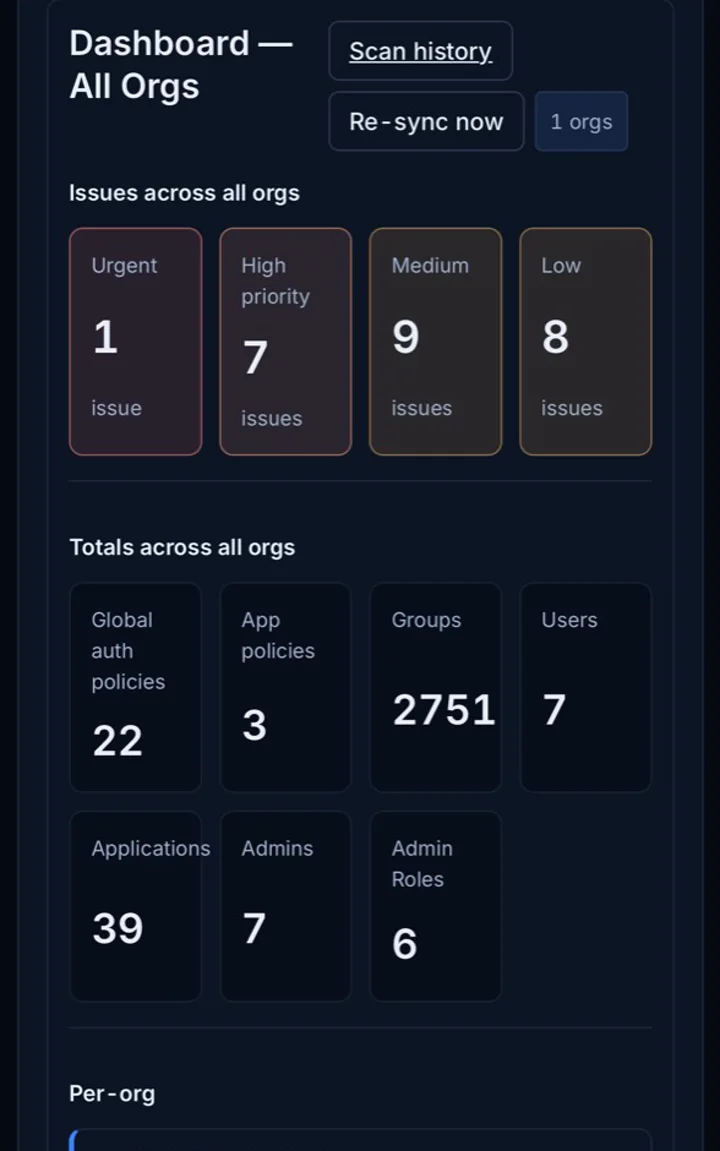
Dashboard evidence
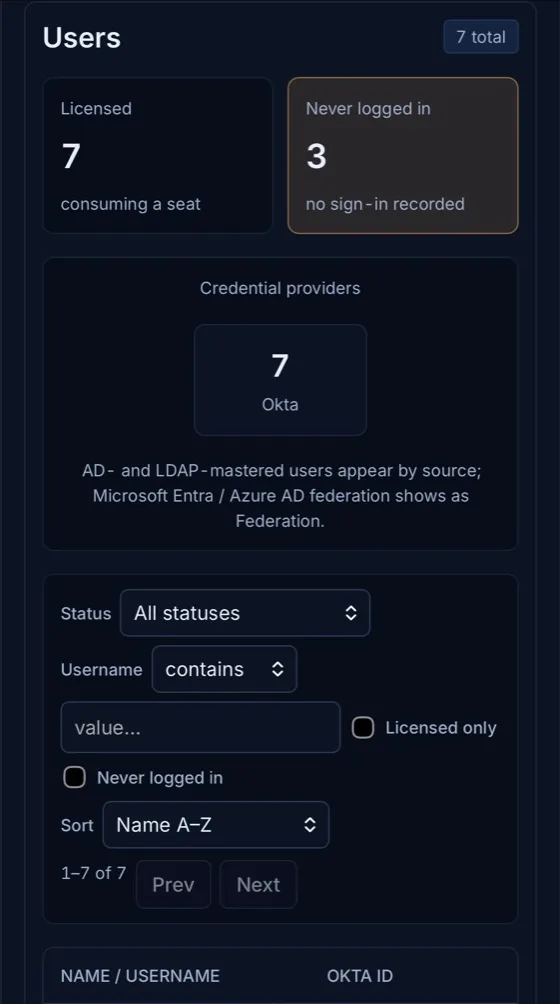
Captured Okta evidence becomes a dashboard teams can review before they open individual findings.
- Severity counts point to the review queue.
- Org totals show the assessment scope.
- Each summary should trace back to captured evidence.
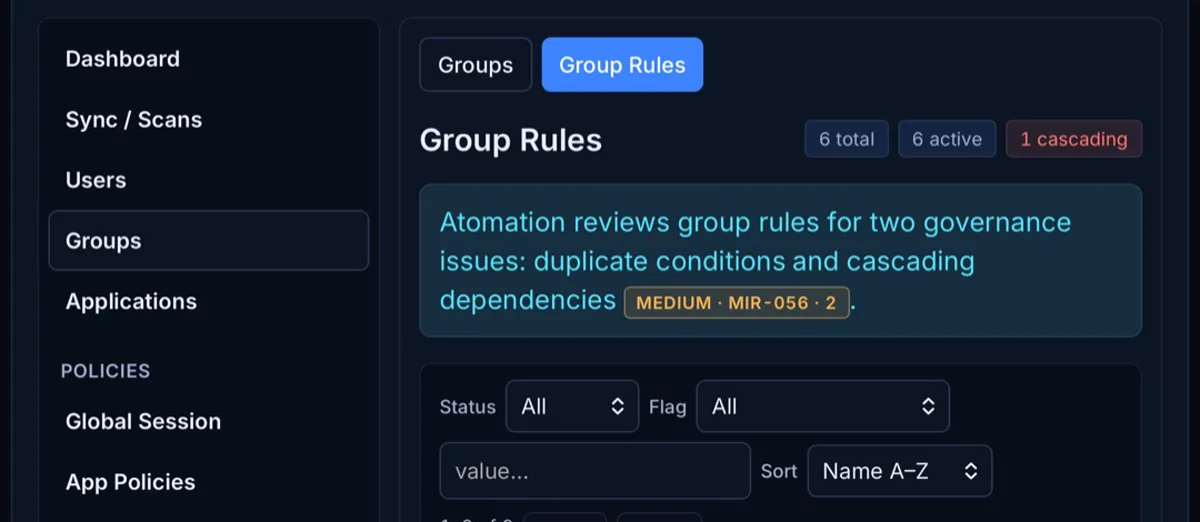
Group-rule dependencies
Visual evidence helps IAM teams review relationships that are easy to miss in exports.
- Cascading rules
- Duplicate conditions
- Assignment paths that need owner review
Licensing signals
When scope includes licensing review, usage signals become evidence for renewal planning.
- Licensed users with no sign-in history
- Usage and assignment signals
- Finance, procurement, IAM, and leadership review
The same evidence supports leadership, operators, and auditors.
The customer-facing report stays concise. The detailed operator view can carry full finding context, screenshots, affected objects, control mappings, and analyst notes.